

Two Olympic bronze medals in Tokyo and Paris have restored India’s place among the leading teams in men’s hockey. Indian hockey has rebuilt itself over the past fifteen years, and the evidence is hard to argue with. However, the one tournament that has stayed out of reach is the World Cup.
India last won it in 1975. They have hosted two of the last three editions, in 2018 and 2023, and went home early both times. The 2026 World Cup begins on August 15. The question is whether this time is different, and why it should be.
The Evolution of Indian Hockey: What Changed Between 2018 and 2026?
The change is easier to show than to describe. In Tokyo, Australia beat India 7-1 in just the second game of the tournament. India came back and won their next three matches to reach the knockout rounds. In the bronze medal match against Germany, India went 1-0 down inside two minutes. Germany then scored twice in the 24th and 25th minutes to lead 3-1. India responded with four goals in seven minutes through Hardik, Harmanpreet, Rupinder and Simranjeet to lead 5-3. Germany pulled one back in the 48th minute but India held on to win 5-4.
The response after the Australia defeat, followed by the comeback against Germany, showed a team that no longer allowed one bad result or one difficult spell to define its tournament.
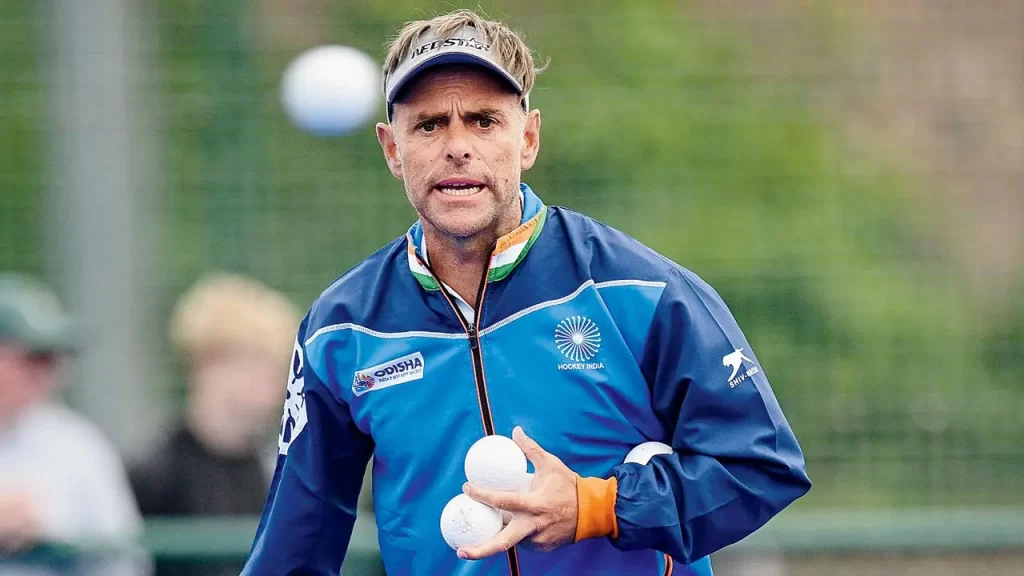
The shift did not happen overnight. Under Graham Reid, who took charge in 2019, India became fitter, more structured and more resilient under pressure. Craig Fulton has since built a clearer defensive counterattacking identity around those foundations.
The clearest example of what this looks like under pressure came at the Paris Olympics against Great Britain. In the 17th minute, Amit Rohidas received a red card. India were down to 10 men with the score at 0-0. Rather than collapse, India scored five minutes later through Harmanpreet Singh. Great Britain equalised through Lee Morton in the 27th minute. For the remaining 43 minutes, India defended with 10 players, protected the centre of the pitch and repeatedly denied Great Britain despite sustained pressure. They took the match to a shootout and won it.
India did not control possession, but they controlled how they defended the disadvantage.
Read More: Hockey India Names 20-Member Women’s Squad for 2026 Asian Games
Why Olympic Success Hasn’t Translated to the Hockey World Cup
The tournament format played a bigger role in India’s previous World Cup campaigns than it was given credit for. At the Olympics, teams are split into two pools of six, with the top four from each reaching the quarterfinals. That gives teams five matches to find their footing.
At the 2018 and 2023 World Cups, a team that did not win its pool could face a knockout crossover in its fourth match. India topped their pool in 2018 but lost to the Netherlands in the quarterfinals. In 2023, finishing behind England on goal difference sent them into a crossover against New Zealand, where their campaign ended.
Since quarterfinals were introduced to the Olympic format in 2016, India have won medals in Tokyo and Paris. The longer pool stage has given them more room to recover from a poor result. The two previous World Cup formats offered less margin.
Preparation has been the other defining factor, and the pattern across the last three World Cups and two Olympics tells a clear story.
Before the 2018 World Cup, India finished second at the Champions Trophy in Breda in June. What followed was a compressed schedule, with the Asian Games in Jakarta in August and the World Cup in Bhubaneswar in November. Three major tournaments in six months. Viewed through Bompa’s periodisation framework, India’s 2018 schedule suggests the players may have spent too long in a high-intensity competitive phase. By November, the question was whether the body still had enough time to recover and peak again. India topped their group above Belgium, who went on to win the tournament, but lost to the Netherlands in the quarterfinals.
Read More: Peaking at the Right Moment: The One Thing That Will Define India at the 2026 FIH Hockey World Cup
The 2023 World Cup followed the same pattern. In October and November, India hosted six Pro League matches in Bhubaneswar. Then, in late November and early December, they toured Australia for five Test matches, losing four of the five in high-scoring, physically demanding games. By the time the World Cup arrived in January, India had been in high-intensity competition for over two months.
Tokyo 2021 was different for a reason nobody would have chosen. The absence of a full competitive calendar meant India arrived without the same accumulation of tournament load seen before the two home World Cups. They beat Great Britain 3-1 in the quarterfinals and won bronze. It was not planned that way, but it worked that way.
India’s preparation for Paris followed a different pattern. Before the Olympics, India’s preparation results were poor by conventional measure. They lost all five Test matches in Australia. Results at the Four Nations in South Africa and the Five Nations in late 2023 were mixed. The results suggest Fulton treated those tournaments as preparation rather than as competitions in which India had to peak. He rotated combinations and continued testing the side despite the defeats. By Paris, India were able to sustain their defensive structure and produce results under knockout pressure. They beat Australia 3-2 in the group stage and won bronze, defeating Spain 2-1 in the medal match.
How Prepared Is India for the 2026 World Cup?
Judge India’s readiness by the Pro League standings and the picture looks poor. India finished eighth, above only Pakistan, who were relegated. The results did not go their way.
But Fulton’s track record asks you to look beyond results in preparation tournaments. He followed a similar path before Paris, with poor results in Australia and mixed results at the Four Nations and Five Nations. India then arrived at the Olympics ready to compete. The European leg of the Pro League told a more honest story. Wins over Germany, the Netherlands and Pakistan showed a team finding its shape at the right time.
The new World Cup format gives India a realistic route to the second group stage, but qualification cannot be treated as automatic. What happens beyond that is the subject of a separate conversation. India’s preparation, their response to setbacks and the defensive structure seen under Fulton suggest they have addressed some of the problems exposed in 2018 and 2023. The World Cup will show whether those changes are enough.
Whether they are enough from August 15 is the question that matters now.
While the selectors finalise their squad, you can have your say. Use the Give Me Hockey Squad Selector to pick your India men’s World Cup twenty and share it with your friends.
Indian men World Cup Squad Selector
Indian women World Cup Squad Selector
Want more like this? Subscribe to the Give Me Hockey newsletter and get our World Cup coverage delivered straight to your inbox.




Comments are closed for this article.