


January 13, 2023. India beat Spain 2-0 on the opening day of a home FIH Hockey World Cup. Spain, a side ranked in the world’s top ten. The crowd at Bhubaneswar erupted. A great start.
Two days later, a different Indian side turned up. One that looked deflated, out of ideas, and tired. India faced England and could not score. 0-0.
January 19. Wales. A minnow side. India led 2-0 and looked comfortable. Then Wales scored twice in the 43rd and 45th minutes to level it at 2-2. India eventually won 4-2, with Akashdeep scoring in the 46th minute and Harmanpreet in the 60th. But the warning signs were there.
January 22. The crossover. New Zealand, a team that had won only one of their three group games. India led 3-1 with nine minutes left. Lalit had scored in the 18th minute. Sukhjeet in the 25th. Varun in the 41st. The quarterfinals felt inevitable.
Then Lane scored in the 29th minute. Russell equalled the 44th. Findlay in the 50th. 3-3. Penalties. India were knocked out.
The team that had beaten Spain on day one could not hold a two-goal lead against a side that barely qualified for the crossover round. Nine days. Four matches. The sharpness that was there on January 13 was gone by January 22.
While Indian fans have been calling this pressure or the inability to hold their nerves, there is another aspect that we fail to grasp. Peaking at the right time. And understanding it might be the most important thing Craig Fulton does between now and August 15.
What Peaking Actually Means
Peaking is not something a coach talks a team into. It is something the body goes through. Tudor Bompa, one of the world’s leading sports scientists and author of the coaching manual published by World Rowing’s FISA development programme, defines it precisely. Peaking is a temporary state of training produced when physical and psychological elements are maximised and when technical and tactical preparation are optimal. It is not something that happens by accident. It is planned, sequenced, and timed.
In plain terms: there is a window when a team is at its absolute best. The job of a coach is to make sure that window opens at the right tournament, not three months before it.
The key word in Bompa’s definition is temporary. An athlete or a team cannot sustain peak performance indefinitely. The body does not work that way. What Bompa calls the overcompensation cycle explains why. Hard training breaks the body down. Recovery allows it to rebuild, and crucially, to rebuild higher than before. That rebuilt state is the peak. But if competition demands keep coming before recovery is complete, the body never reaches that higher state. It stays flat, or starts to decline. The team looks the same from the outside. Inside, they have already given their best.
Read More: India’s Big Call: Chase World Cup Glory or Secure Olympic Qualification?
What the Research Shows
James Hillier, former National Coach for England Athletics and now Athletics Director at the Reliance Foundation, puts it directly. “Peaking starts on the first day of training, not a week before competition,” he told Scroll.in. “I have always been a big advocate of less is more in the period before a major competition. A lot of people make the mistake of doing too much before the big competitions. It is a very common mistake.”
Bompa goes further with a specific number that is directly relevant to Indian hockey right now. Studies of elite athletes show that seven to ten competitions are enough to reach a high state of readiness for a major tournament. More than that and the risk of declining performance before the main event increases significantly. The longer the phase of weekly competitions, Bompa writes, the lower the probability of duplicating high results.
Eight Pro League matches. June 14 to June 28. That number is not a coincidence. It sits exactly within the optimal range.
Read More: The Federation Is Not the Dressing Room, Part 2: What Hockey India Own Documents Reveal
FIH Hockey World Cup 2018: When India Got It Wrong
In June 2018, India finished second at the Champions Trophy in Breda, Netherlands. It was one of their best results in years against top international opposition. The momentum felt real. The confidence was genuine.
What followed was a compressed, brutal schedule. Asian Games in Jakarta in August. World Cup in Bhubaneswar in November. Three major tournaments in six months, each treated as a must-win, each demanding peak output from the same group of players.
At the FIH Hockey World Cup, India topped their group above Belgium, who went on to win the entire tournament. India and Belgium finished level on points. That is not a team that has lost its way tactically. That is a team performing at a very high level in the group stage. Then they lost to the Netherlands in the quarterfinals and went home.
Apply Bompa’s framework and the picture becomes clear. India had been in high-intensity competitive mode since June. By November, the overcompensation cycle had no room to work. The body was not rebuilding between tournaments. It was just coping. The peak had come and gone months before the World Cup arrived.
FIH Hockey World Cup 2023: The Same Mistake, Different Year
The 2023 FIH Hockey World Cup was on home soil. India had the venues, the crowd, the preparation time. What they also had was an eleven-match block in the two months directly before it.
In late October and early November, India hosted six Pro League matches in Bhubaneswar against New Zealand and Spain. Competitive matches, home crowd, high intensity. Then in late November and early December, India toured Australia for five test matches in Adelaide. They lost four of the five. But look at the scorelines. 5-4, 7-4, 3-4, 5-1, 5-4. These were not comfortable defeats. These were physically brutal, high-scoring, end-to-end matches against the world’s best side. The kind of matches that take something out of you even when you win.
By the time the World Cup arrived in January 2023, India had been in high-intensity competition mode since October. Eleven matches in two months. Bompa’s warning about the declining probability of high results after a long competitive phase was not abstract. India had lived it. You saw it in how they played against England on January 15. You saw it again against New Zealand on January 22.
Tokyo Olympics 2021: When Circumstance Forced the Right Approach
Tokyo 2021 was different for a reason nobody would have chosen. Covid eliminated the competitive calendar entirely. India could not tour. They could not play international matches. They trained in a bio-bubble in Bengaluru, separated from the world, preparing without the competitive rhythm that coaches normally rely on.
And then they beat Great Britain 3-1 in the Olympic quarterfinals. The result which gave hope to India for the first time in decades.
The bio-bubble preparation forced exactly what Bompa’s science recommends. A long build-up without the accumulated fatigue of a heavy competition schedule. The body had time to reach overcompensation. The team arrived at Tokyo not spent from months of back-to-back tournaments but genuinely fresh, with the physical and psychological capacity to produce something special when it mattered most.
It was not planned that way. But it worked that way. And that distinction matters enormously for what comes next.
Paris Olympics 2024: When Fulton Got It Right
Before the Paris Olympics, India’s preparation results were poor by any measure. They lost all five test matches in Australia. At the Four Nations in South Africa, results were mixed. At the Five Nations in late 2023, they did poorly. Every conventional reading of that form said India were not ready.
But Craig Fulton was not chasing results in those tournaments. He was managing load, rotating combinations, testing players under competitive pressure without demanding peak output. The intent was never to win in Australia or South Africa. The intent was to arrive at Paris at the right point on the curve.
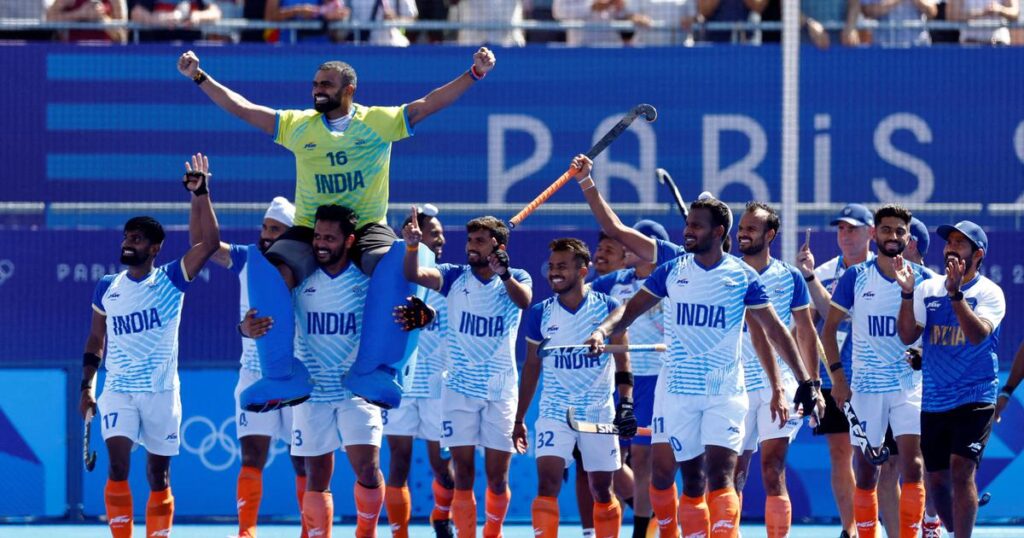
In Paris, India beat Australia 3-2 in group stages. A match that still gives goosebumps. India ended up winning bronze at the Paris Olympics, beating Spain 2-1 in the bronze medal match.
That sequence, poor preparation results followed by a major tournament performance, is not a coincidence. It is what deliberate peaking looks like from the outside when you do not understand what the coach is actually doing. Fulton understood the difference between preparation form and tournament readiness. Paris proved it.
An Appeal: If you do not want to miss pieces like this, subscribe to the givemehockey.com mailing list. Every article lands directly in your inbox.
FIH Hockey World Cup 2026: What Fulton May Be Looking To Do
India’s Pro League form across the last two seasons looks alarming on paper. Winless across multiple matches, sitting eighth in the current standings. The instinct is to treat this as a crisis.
The current Pro League winless run needs to be read through the same lens as Paris 2024. Is this genuine decline or deliberate preparation management? The honest answer is that from the outside, it is impossible to know with certainty. What we can say is that the pattern fits. A coach who managed the Paris preparation correctly is capable of doing the same for the World Cup.
The eight Pro League matches in Rotterdam and London, June 14 to June 28, are not results to be won. They are the competition block that Bompa’s research says is exactly the right number to reach peak readiness. The question is whether Fulton uses them to find answers about midfield combinations and penalty corner structures, rather than chasing points in a standings table where India cannot realistically compete for the title.
Sometime after the Paris Olympics, I had a conversation with K Arumugam, one of India’s most respected hockey writers. We were discussing the 2026 World Cup and what Fulton’s preparation might look like. We both came back to the same point. Before Paris, the form was worrying. It did not look like a team ready to win a bronze medal. Then they did. Now, looking at the Pro League results, the pattern looks familiar. Is Fulton doing the same thing again? Is this the Paris preparation repeating itself? That is the question neither of us could answer with certainty. But we both knew it was worth asking.
Read More: Men’s FIH Hockey World Cup 2026 Schedule: Full Fixtures, Groups and India Match Dates
What August 15 Will Tell Us
Peaking at the right moment is not a mystery. It is a decision. A coaching decision made months before the tournament, through every training session, every competition selected, every player rotation, every time a coach chooses to rest rather than push.
India have got this wrong before. FIH Hockey World Cup 2018 showed what happens when you peak too early. 2023 showed what happens when the competitive load runs too long. Tokyo and Paris showed what happens when the approach is right, whether by design or by circumstance.
Fulton has eight matches in June and 48 days after them before the World Cup opens. How he uses both will tell us everything about whether India arrive in Amstelveen at the top of their curve or past it.
The tournament does not care about Pro League standings or preparation results. It only cares about what a team produces on the day that matters. For India, that day is August 15.
This is an opinion piece. The views expressed are those of the author. References: Tudor Bompa, Peaking for the Major Competition, FISA Coaching Development Programme. Ernest Maglischo, The Taper Period, FISA Coaching Development Programme. James Hillier interview, Scroll.in.