
India’s women have just produced their best World Cup finish since 1974, yet the Women’s HIL is fighting for survival. The deeper question is whether Hockey India has built a strong enough commercial proposition around its own league.
India finished fifth at the 2026 Women’s Hockey World Cup, their best finish in the competition since 1974. The squad contained 11 World Cup debutants and lost only once during the tournament, making it one of the strongest Indian campaigns in decades. In the days around that performance, several Indian players were already talking about another issue: the future of the Women’s Hockey India League.
Neha spoke about the difference the league had made to players such as Baljeet, Sakshi and Rutuja. Captain Salima Tete highlighted its role in widening the national talent pool and exposing players to pressure, while Navneet Kaur appealed to teams and corporate houses to continue supporting the competition. Players from a team that had just produced India’s best World Cup finish in 52 years were publicly making the sporting case for a domestic league whose commercial foundations were becoming increasingly uncertain.
At the same time, Indian companies were finding reasons to invest in hockey elsewhere. HCLTech announced a partnership with Hockey Victoria in March to support the new Melbourne Cobras franchise in Australia’s Hockey One League, including the development of a digital fan engagement platform, while the Cobras also announced Air India as their official airline partner for the 2026 campaign. If a new Australian hockey franchise can give Indian companies reasons to become partners, Hockey India has to ask why its own professional league is finding it so difficult to build the commercial depth needed to keep franchises healthy.
Franchise Exits Put HIL’s Owner Selection Under Scrutiny
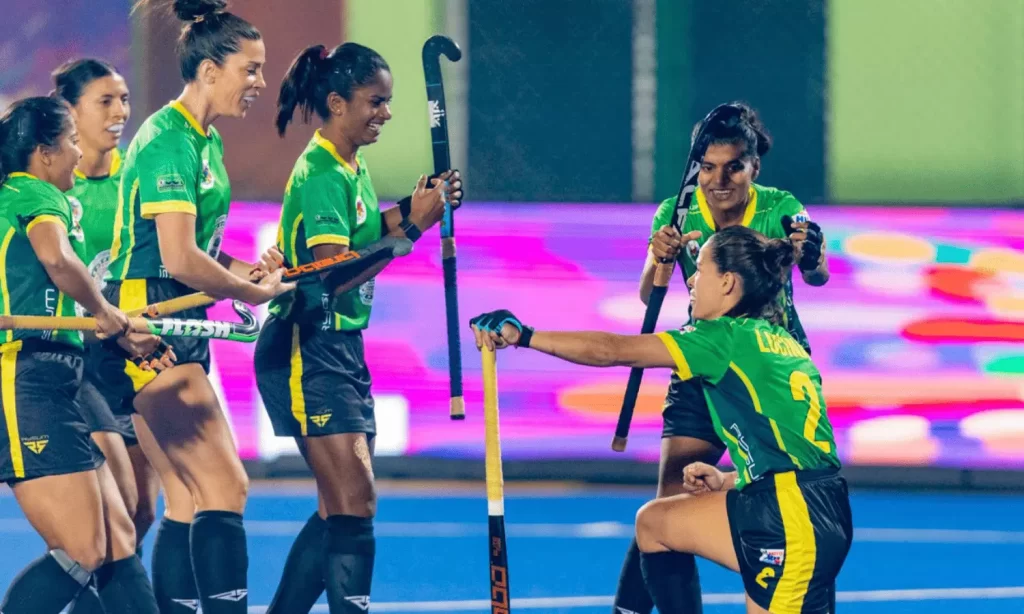
The warning signs are already visible in the Women’s HIL. Inaugural champions Odisha Warriors withdrew before the second season because of financial problems, and Ranchi Royals, who replaced them, have since reportedly exited as well, with players and coaches still awaiting payments at the time of the report. Two of the other three teams were also considering their future, with one already looking for a buyer.
The men’s competition has faced similar disruption. Team Gonasika and UP Rudras left after one season, Hockey India could not find another buyer for UP Rudras in time, and the HIL Governing Council had to operate the replacement team. Ranchi Royals have now pulled out of the men’s competition too, while reports suggest Tamil Nadu Dragons could change ownership and other franchises have been considering whether they want to continue.
The economics explain why owner selection matters so much. Hindustan Times reported that teams were spending around ₹13 crore to ₹15 crore last season, with sponsorship bringing in approximately ₹3 crore to ₹4 crore, while Hockey India has already reduced and then waived the original annual franchise fees. Early losses should have been part of the calculation when the league was relaunched because professional sports properties take time to build an audience, sponsorship portfolio and franchise value.
HIL has serious corporate owners such as JSW and Vedanta, yet the instability elsewhere raises questions about whether the same long-term appetite existed consistently across the ownership group. If substantial losses were likely during the first few seasons, owners needed enough capital and enough reason to stay while audiences, sponsorship and franchise value developed. Getting enough owners to launch a league solves the first problem; keeping those owners interested through several expensive seasons determines whether the league has a sustainable foundation.
Read More: From Teal Art to Neon Pink: 6 Best Jerseys of the 2026 Hockey World Cup
What Hockey Can Learn from the IPL’s Early Commercial Selling
Any Indian franchise competition eventually gets compared with the IPL. Cricket operates at a scale that hockey, rugby, football and every other major Indian sport struggles to approach, with television audiences, advertising budgets and celebrity recognition far beyond the rest of the market. A realistic benchmark for HIL is whether hockey can establish a sustainable position within the wider Indian sports market.
There is still something useful in the way the early IPL was commercially sold. Lalit Modi has described how the first IPL title sponsorship tender received no bids and says DLF eventually took the title rights for ₹40 crore per year over five years after the process was postponed. Modi has also said in an interview clip that he knew DLF chairman K.P. Singh personally and approached him while the company was preparing for an IPO and planning a major marketing spend.
The lesson for hockey is about commercial selling and networking. Modi knew a senior decision-maker, understood that a marketing budget existed and gave the company a reason to consider a new sporting property after the initial tender had produced no sponsor. That leaves Hockey India with a straightforward question: how deeply is HIL being sold into corporate India, and how actively are companies being identified whose business objectives fit what the league offers?
How Indian Rugby Built a Broader Commercial Network
Rugby provides a more relevant domestic comparison because it begins from a much smaller position than hockey in India. It has far less public recognition, almost none of hockey’s Olympic history and nowhere near the national-team profile that Indian hockey enjoys. The Rugby Premier League has still managed to build a broad commercial ecosystem.
HSBC is the title partner, while the league and its wider partnership structure include companies across technology, real estate, hospitality, hydration, healthcare, consumer goods and other sectors. Brands associated with it include Capgemini, Bisleri, Amul, Titan and several others. The financial value of every agreement is not publicly available, so the number of logos cannot be treated as a comparison of sponsorship revenue, although the breadth of participation is still significant.
There is evidence that this commercial planning was deliberate. Rugby India’s tender for a commercial partner included developing a sustainable financial model, selling media rights, securing sponsorship across categories, identifying prospective franchise owners and assessing their expertise and financial capability. Those responsibilities put ownership, sponsors, media and revenue into the same commercial planning process.
The ownership structure also includes substantial private businesses, with Rugby India identifying Chennai Bulls with Avid Sys Sports, Delhi Redz with RMZ Corp, Mumbai Dreamers with Dream Sports and Kolkata Banga Tigers with Hunch Ventures. Hockey has considerably more raw material in India through Olympic medals, established hockey centres, internationally recognised players and decades of national-team visibility. Rugby’s ability to find owners and partners from a smaller base makes HIL’s commercial struggles harder to explain through the size of the sport alone.
Why Melbourne Cobras Have Given Indian Companies a Reason to Invest
The Melbourne comparison goes further because the underlying product is hockey. Melbourne Cobras are preparing for their first Hockey One League season, and Hockey Victoria has built an India-Australia connection directly into the franchise by combining Indian internationals with Australian talent and trying to connect supporters in both countries. That gives prospective partners a clearer audience and business story from the outset.
HCLTech’s involvement shows how that positioning can become a commercial proposition. Its agreement includes designing and developing a digital fan engagement platform for Hockey Victoria and the Cobras, using interactive content and digital tools to improve the way supporters engage with the sport. Hockey Victoria receives technology that can improve its product, while HCLTech receives a live sporting environment through which it can demonstrate its capabilities and strengthen its connection with the Australian market.
Air India enters from a different angle because an airline connecting India and Australia has a logical relationship with a franchise deliberately building links between those two markets. The commercial value of the Air India and HCLTech deals has not been disclosed, yet strategic partnerships still represent value through money, services, technology, customer access, expertise, brand exposure or market access. Melbourne Cobras have already created reasons for Indian companies to participate before completing their first Hockey One season, and that is the part HIL should be examining.
Read More: Asian Games 2026 Women’s Hockey Schedule: Pools and Fixtures
HIL Needs to Give Sponsors More Than Logo Space
Hero committed to HIL as title sponsor for three seasons when the competition returned in 2024-25, while Bisleri and Apollo Hospitals have also been part of its commercial structure. Those are credible brands, and the opportunity underneath them remains much larger across technology, banking, insurance, airlines, hospitality, education, real estate, nutrition, payments and analytics. Each category can have a role when HIL connects its assets with something companies actually want to achieve.
HCLTech’s Melbourne arrangement provides one example of that thinking because technology becomes part of the sporting product itself while the company receives an environment in which it can showcase its capabilities. Similar thinking could create partnerships around payments, travel, loyalty programmes, hospitality, fan data, digital content, community programmes and local retail. That commercial depth becomes particularly important when franchises are carrying costs far beyond the sponsorship income they currently generate.
Networking has a role here as well. Corporate partnerships often begin through relationships with agencies, business leaders and senior decision-makers who understand where marketing and strategic budgets are going, so waiting for companies to discover hockey on their own leaves too much to chance. Hockey India has benefited enormously from Odisha’s backing over many years, and that stability also created an opportunity to keep widening the private-sector network around the game so that more companies became commercially invested in hockey.
Fan connection is part of the same commercial question. From watching HIL, many matches with free entry have still appeared sparsely attended, while India matches at some of the same venues have drawn crowds under the same free-entry conditions. There are no official attendance figures for every match, so this remains an observation, but the contrast suggests HIL still has work to do in creating attachment to its franchises and giving sponsors a repeat audience rather than simply access to a stadium crowd.
The Sporting Mandate Exists: Now Hockey India Must Execute Commercially
India’s fifth-place World Cup finish was their best since 1974, and the comments from Neha, Salima Tete and Navneet Kaur matter because they connect that progress with a domestic competition whose future has become uncertain. The league gives Indian players access to stronger domestic competition, international teammates and a route through which emerging players can make themselves visible at a higher level. That provides Hockey India with a genuine sporting reason to keep the Women’s HIL alive and build the wider league into a stable part of Indian hockey.
The commercial side now requires the same level of attention. Rugby has found ways to bring a broad range of businesses into a smaller sporting ecosystem, while Melbourne Cobras have given HCLTech and Air India reasons to associate themselves with a new hockey franchise in Australia. HIL has greater domestic history, established hockey markets, Olympic relevance and access to India’s leading players, yet the current franchise instability suggests Hockey India has not converted enough of those advantages into commercial value.
Indian hockey already has a place in the country’s sporting landscape, and HIL has a sporting purpose worth preserving. Its future now depends on whether Hockey India can build stronger owners, stronger commercial relationships and stronger connections between franchises and their cities. The job is to make the league valuable enough that companies and owners want to remain part of it.
If you enjoy independent analysis of Indian and international hockey, subscribe to Give Me Hockey on Substack for more deep dives, context and opinion beyond the headlines.


Comments are closed for this article.