
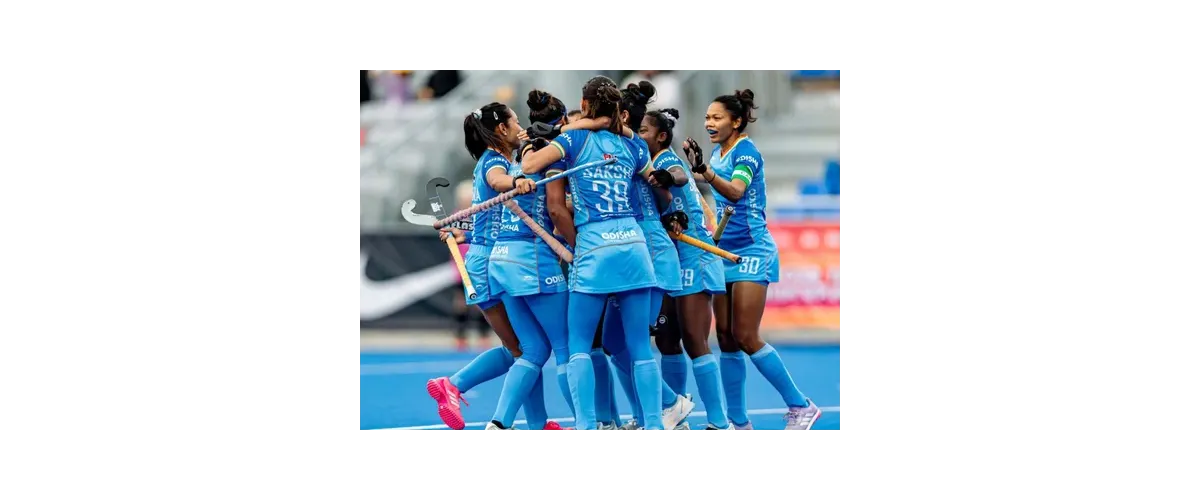
A fifth-place finish built on defensive discipline, collective commitment and an intelligent attacking outlet changed what should be expected from India next.
India women’s hockey World Cup 2026 campaign ended with a 3-1 win over Germany and a fifth-place finish, India’s best result at the tournament since 1974. The final position mattered, but the way India got there was more significant. They held Olympic silver medallists China, drew with England and Australia, pushed the Netherlands far harder than expected, and finished by beating world No. 5 Germany.
The strongest performances were built on defensive discipline. Defenders and midfielders carried most of the structural work, but the forwards also dropped behind the ball. India stayed compact, protected the circle and made stronger teams work for openings rather than giving them easy access.
There was also enough threat going forward to stop opponents from treating India as a side that could simply be pinned back for 60 minutes. Navneet Kaur was central to that balance, repeatedly giving India an outlet when possession changed and finishing the tournament with four goals.
China Was the First Sign This Team Was Different
The 2-2 draw against China changed the feel of India’s tournament immediately. China had won silver at the Paris Olympics, and India were facing one of the strongest teams in the competition in their opening game. Navneet Kaur put India ahead in the eighth minute, Deepika restored the lead in the second quarter, and China had to come from behind twice to take a point.
India were already showing the discipline that would define the campaign. They were comfortable getting numbers behind the ball and protecting the important spaces without allowing every spell of pressure to turn into panic inside the circle. The draw did not guarantee anything, but it showed that India could stay in a match against an opponent they had every reason to respect.
The next game showed that the team could change the balance when the matchup allowed it. India attacked South Africa far more aggressively and won 6-1, with six different scorers. Against stronger opposition, the approach became more selective again, with the whole team prepared to work behind the ball before looking for the moments to break.
Defensive Discipline Became India’s Biggest Strength
Having numbers behind the ball only works when those numbers remain organised. India generally protected the middle, kept bodies between the ball and goal, and avoided turning every dangerous entry into a cheap penalty corner. When penalty corners did come, the defensive unit treated them as another phase to survive rather than an invitation for the game to open up.
England offered an important comparison. They had beaten India 2-0 in the World Cup Qualifier final in Hyderabad only months earlier, yet the World Cup meeting ended level. Australia also failed to score in a 0-0 draw despite registering 13 shots to India’s one, a result that ended India’s semifinal hopes but again showed how difficult this team had become to break down.
The pattern was consistent enough to matter. The forwards dropped back, the midfield protected space, and the defence was rarely left to absorb attacks on its own. India defended as one unit, and the Netherlands provided the hardest test of how far that approach could hold.
Read More: The Stars Hockey Almost Stole: Famous Faces Who Played Hockey
The Netherlands Showed How Far India’s Defence Had Come
The Netherlands scored almost immediately through Yibbi Jansen, and an early Dutch goal can quickly turn a match into a long evening. India did not let the score run away. The second goal did not arrive until the 38th minute, when Frederique Matla converted another drag flick, and the match finished 2-0.
The official match account described long periods of Dutch pressure and India’s defence, led by Savita, repeatedly holding firm. The match-centre numbers underline the volume India faced: 22 Dutch shots and nine penalty corners, with both goals coming from PCs. India spent long stretches without control of the ball, but the defensive shape did not collapse after conceding early.
For this campaign, that was the peak of the defensive identity. The Netherlands kept attacking and kept searching for another opening, while India continued to protect the circle and make the defending champions work through bodies. A 2-0 defeat does not normally become a highlight, but this one showed how much resistance India could produce against the strongest test in the tournament.
Navneet Kaur Gave India an Attacking Outlet
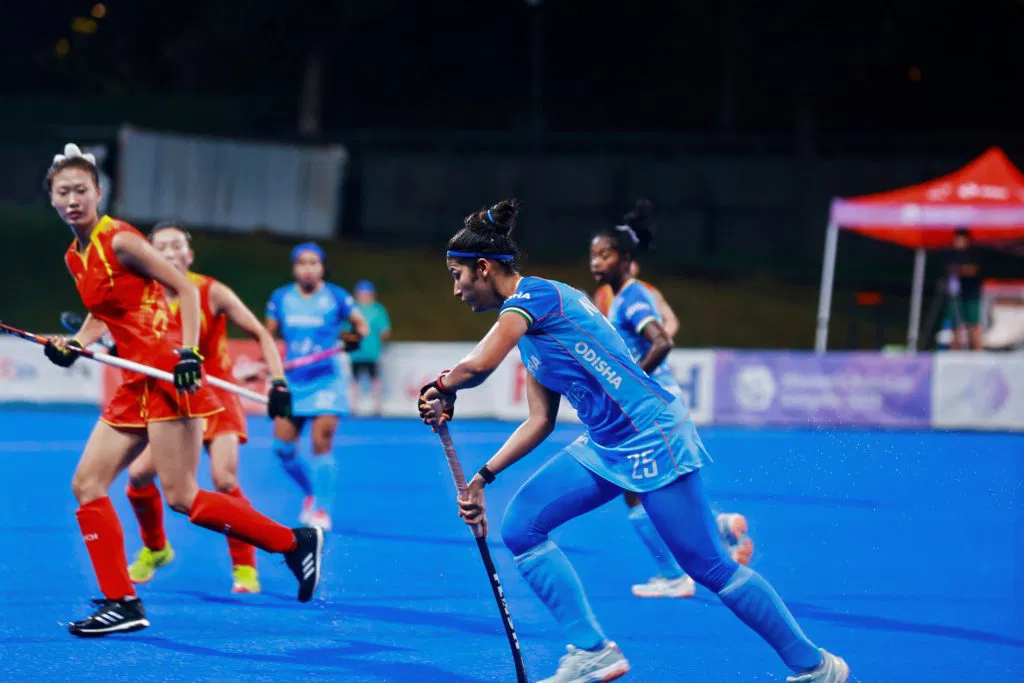
Deep defending becomes much harder if the opposition knows there is no threat once possession changes. Navneet Kaur made sure India still had one. FIH’s player statistics list four World Cup goals for her, split between two field goals and two penalty-corner goals.
The goals only capture part of her tournament. Navneet repeatedly looked like India’s most threatening player when space opened ahead of her, and what stood out was the intelligence of those actions. She did not need to force every attack. She recognised when to carry, when to release the ball and when a limited transition could be turned into useful territory or a genuine chance.
Deepika also scored twice, although she did not have the tournament that might have been expected after finishing as joint top scorer at the Nations Cup in June. Navneet was the more constant threat at the World Cup, and her ability to give India something at the other end made the defensive commitment easier to sustain.
Germany Gave India the Finish Their World Cup Deserved
The 3-1 win over Germany gave India a result that matched the level of their campaign. Germany had more of the attacking initiative during the first half, while India were largely defensive and relied on their structure to keep the game goalless. India still produced one strong attacking sequence in the second quarter, forcing three saves from German goalkeeper Finja Starck.
The match changed in the third quarter. Ishika Chaudhary carried the ball forward and broke the deadlock in the 43rd minute with a reverse finish, before Navneet Kaur doubled the lead a minute later. India had spent much of the match absorbing Germany’s attacks, then took control of the scoreline in the space of two minutes.
Navneet added a third early in the final quarter, showing the composure that had made her India’s most consistent attacking outlet during the tournament. She dribbled away from the goalkeeper before finishing, giving India a 3-0 lead that effectively settled the contest. Germany scored only in the 59th minute after Savita had already made two saves in the same sequence.
The result reflected much of what India had done well throughout the World Cup. They stayed organised through difficult periods, remained patient when Germany had more of the ball, and then made their attacking moments count when the game opened up. Neha said afterwards that India became more aggressive inside the circle during the third quarter while keeping their calm, which fits the way the match changed after half-time.
That gives the Germany section much more substance and makes it feel like a real match analysis rather than just a result summary.
The Asian Games Target Is Now Gold
India were already going to the Asian Games as medal contenders. The World Cup raises the target because the team has now shown it can stay competitive when stronger opponents control long periods of a match, while still carrying enough threat to punish them when chances appear.
There are still problems to solve. India will need more attacking output in matches where they are expected to control possession, and the defensive structure will be tested differently by Asian opponents who may give India less space to counter. The World Cup, however, provided a clear base: disciplined defending, collective work behind the ball and an attacking outlet in Navneet.
Before the tournament, a medal at the Asian Games was already a realistic expectation. After holding China, taking points from England and Australia, limiting the Netherlands to two goals and finishing fifth with a 3-1 win over Germany, silver should no longer be the ceiling. India should go to the Asian Games believing they can win gold.
For deeper World Cup analysis and the stories behind India’s performances, follow Give Me Hockey on Substack. If you already subscribe, forwarding the piece to another hockey fan helps the publication reach more readers.


Comments are closed for this article.