

India entered the World Cup with several concerns already visible. Midfield control had been inconsistent, discipline had caused problems, attacking output against stronger teams remained uncertain, and there was a wider question around what India would do if defence-to-counter stopped producing enough chances. Those concerns had already been raised in the pre-tournament analysis, and they followed India into the tournament.
England exposed some of them first. Pakistan gave India a very different type of game, but defeats against the Netherlands and Argentina showed how difficult things became once India had to move away from the style they were most comfortable playing. India’s elimination cannot be reduced to one bad match or one decision; their preferred way of winning stopped producing enough, and the team could not consistently find another route.
England Put India Under Pressure Early
Craig Fulton has built this Indian team around defending well, staying organised and attacking quickly after winning possession. India have played that style effectively at different stages under him, including during the Pro League before the World Cup, so the basic approach itself was not the problem.
The first major warning came against England. India led 2-1 before losing 4-2, and the result immediately reduced their room for error. Pakistan followed and India won 5-3 in a much more open game where the attacking players had more space, although conceding three also showed the risk of allowing the match to become stretched.
With the Netherlands and Argentina waiting in the championship pool, India were eventually going to need more than patience and counterattacking opportunities. The England defeat meant those harder matches arrived with greater pressure already attached to them.
India Had Another Plan, but Could Not Execute It
The immediate impression once India moved away from defence-to-counter was that there was no clear Plan B. Fulton’s post-match comments after the Argentina defeat make that assessment less straightforward. He said India had not played the fast attacking hockey expected of them, which suggests an attacking alternative existed but was not executed well enough when the tournament demanded it.
There is still a coaching question. Before the Wales match, Fulton had spoken about India wanting to defend and counter. With India ahead at half-time against weaker opposition, there was an opportunity to spend part of the second half testing a more aggressive approach in competitive conditions. If fast attacking hockey was going to become the alternative later in the tournament, it needed to be rehearsed before the Netherlands or Argentina forced the issue. Fulton’s Hockey India post-match video adds weight to the execution side of that question.
Responsibility therefore sits on both sides. If the alternative was not prepared enough, that belongs to the coaching staff. If it was prepared properly and the players could not carry it out, the failure moves onto the pitch as well.
The Midfield Could Not Control Enough of the Game
Midfield was India’s biggest weakness against the stronger teams. Hardik Singh and Manpreet Singh remain highly rated players, but India did not get enough influence from that area between recovering possession and establishing sustained pressure further up the pitch.
Hardik was regularly involved defensively. The bigger problem came after India won the ball, when too many possessions failed to develop into controlled attacks in the opposition half. Control in this context is not possession around the defensive line; it is progressing the ball, keeping attacks alive and forcing an organised defence to keep adjusting.
Against weaker teams, India could find space more easily. Better sides recovered quickly and packed the defensive areas, which meant India had to create openings through movement, support and combinations. That did not happen often enough, leaving the forwards with isolated situations instead of repeated pressure.
The Forwards Cannot Be Judged in Isolation
Much of the reaction after elimination has focused on individual players, with calls for one forward or another to be replaced. The next question has to be who replaces them and what the replacement actually brings, because real hockey does not work like a video game where changing one name automatically improves the team.
Roles matter as much as names. Mandeep Singh has previously operated effectively behind the main striker, helping attacks develop and connecting with players around him. That influence was less visible during this tournament, but India were also not consistently supplying enough useful possession into the forward line.
Abhishek, Sukhjeet Singh and Dilpreet Singh still carry responsibility for their movement, decision-making and finishing. However, the forwards cannot be judged as though India were repeatedly creating quality attacking situations and simply failing to convert them. Too many attacks broke down before reaching that point.
Senior Players Have to Solve Problems Too
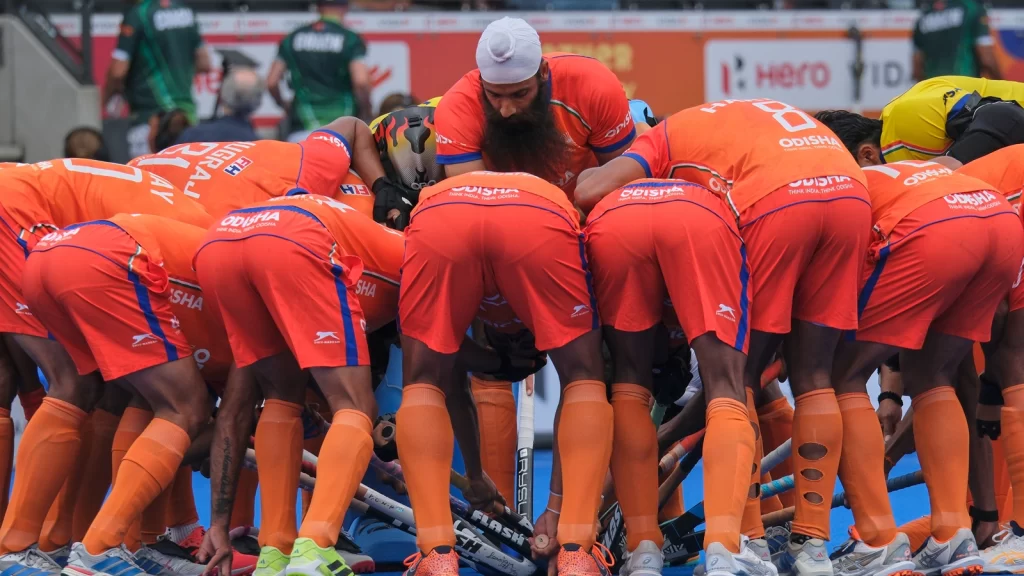
Fulton cannot carry the entire responsibility for what happened. A coach can prepare the structure, assign roles and make changes from the sideline, but experienced players still have to recognise problems and react during the match.
India have several senior internationals who have seen almost every type of game situation. That experience should become visible when the midfield is struggling, the tempo has dropped or the original attacking pattern is producing little. Against Argentina, the body language during the second quarter appeared flat, with shoulders dropping even though Sukhjeet Singh had reduced the deficit to 2-1 in the 10th minute and there was still enough time to change the game.
Harmanpreet Singh also went through that flat period, but later began moving higher and attacking more from the left. That was an example of a senior player recognising that India needed something different and trying to influence the match from another area. Leadership can be as simple as demanding possession, changing the tempo or moving into a space that forces the opposition to react.
Fulton Owns the Preparation and Selection
Player responsibility does not remove the questions for Fulton. He selected the squad, decided how India would prepare and had to ensure the team could deal with different game situations.
The selection debate does not need to become a list of players who should or should not have travelled. That belongs in a deeper review after the tournament. The immediate question is whether India had the right balance of attributes for a team that might eventually be forced away from defence-to-counter.
The same applies to tactical preparation. If India knew their preferred approach depended heavily on transition, the coaching staff also had to prepare for matches where those opportunities disappeared. The World Cup did not show a team comfortable enough making that switch while preserving the defensive balance that had made Fulton’s system effective.
The Ball Tempo Dropped From the Pro League
One of the clearest differences from the Pro League was the speed at which India moved the ball. The defence-to-counter approach had often carried urgency before the World Cup, while the tempo against stronger teams during the tournament appeared slower.
Transition hockey depends on timing. Once India win possession, the opportunity lasts only until the opposition gets back into shape. A slower first pass or carry gives defenders time to recover and changes the attacking picture before India can use the space.
England and the Netherlands were not unfamiliar opponents because India had faced both only weeks earlier in the Pro League. Opposition quality alone therefore does not explain the difference. World Cup pressure, caution or poor execution are all possible factors, but the exact cause cannot be established from outside the team.
Paris 2024 Shows the Quality Did Not Simply Disappear
Many of the same core players won Olympic bronze only two years ago, which makes it difficult to argue that this group suddenly lacked enough quality to compete with the best teams. The earlier analysis on peaking at the right moment was built around exactly that tension between underlying quality and producing the required level at a major tournament.
India’s midfield was not dominant throughout Paris either, yet the team competed with Argentina, Belgium, Australia, Great Britain, Germany and Spain. The Great Britain quarterfinal remains one of the strongest examples of how effective the group could be inside Fulton’s structure.
India played the final 43 minutes of that quarterfinal with ten players after Amit Rohidas was sent off and still defended with remarkable discipline before winning the shootout. Paris showed how effective this group could be when the system was played with intensity and belief. The World Cup exposed the weaknesses much more quickly when that level dropped.
The World Cup Gave India Less Breathing Space Than Paris
The different tournament formats also matter when comparing Paris with the World Cup. At the Olympics, India had to finish among the top four in a six-team pool to reach the quarterfinals, which gave them some margin for error. Once the knockouts began, keeping a match level could still lead to a shootout, a situation that suited a team comfortable defending for long periods and staying patient.
The 2026 World Cup removed the quarterfinal stage and used a second league phase before the semifinals. Results against fellow qualifiers were carried forward, so one poor result could increase the pressure on everything that followed. India entered the championship pool without points after the England defeat, with the Netherlands and Argentina waiting.
That format did not cause India’s elimination, but it exposed the limits of their preferred style. Paris gave India more room to remain patient, while the World Cup eventually forced them to chase results and goals. India were much less convincing once the situation demanded that change.
Why India Are Out
India’s elimination came from several problems connecting at the wrong time. Defence-to-counter remained their strongest route, but when stronger opponents reduced those opportunities, India did not control midfield well enough or create enough sustained attacks against organised defences.
More aggressive hockey brought another problem because the defensive protection weakened when India committed more players forward. The ball tempo also dropped compared with some of the Pro League performances, while senior players did not consistently influence matches when the original approach stopped working.
Fulton has to answer for the preparation, the tactical alternatives and the squad he selected. The players have to answer for execution, decision-making, movement and the level of leadership shown when matches began moving away from India. Several of these weaknesses were visible before the World Cup, which makes their appearance in the decisive matches more concerning.
India arrived with a clear way of playing. Once the tournament forced them away from it, they were not good enough at finding another reliable way to win.
Follow the remaining tournament, results, standings and all India coverage on the Give Me Hockey World Cup 2026 Hub. For the daily World Cup bulletin and a more personal view of the tournament, visit Give Me Hockey on Substack.


Comments are closed for this article.